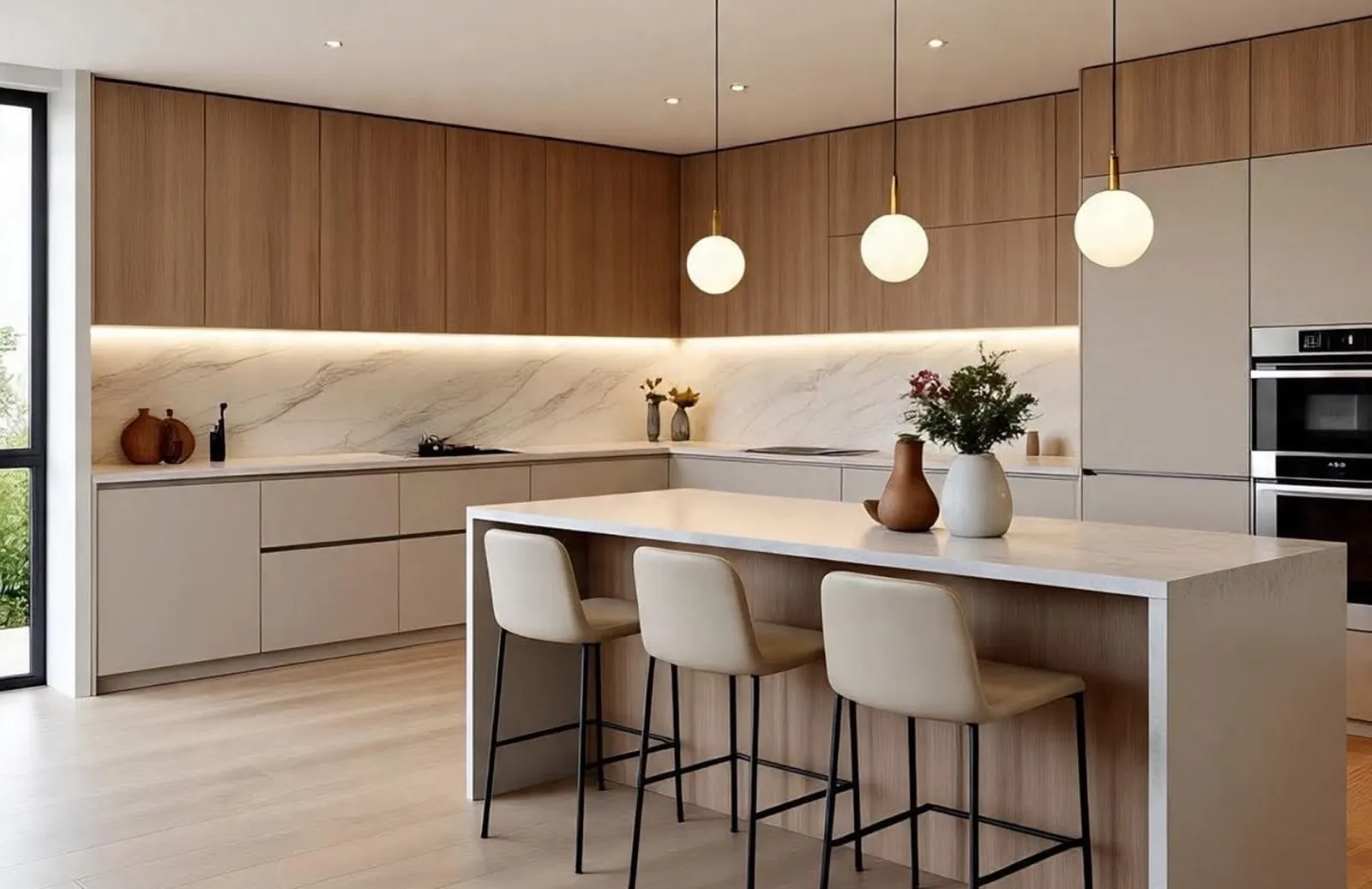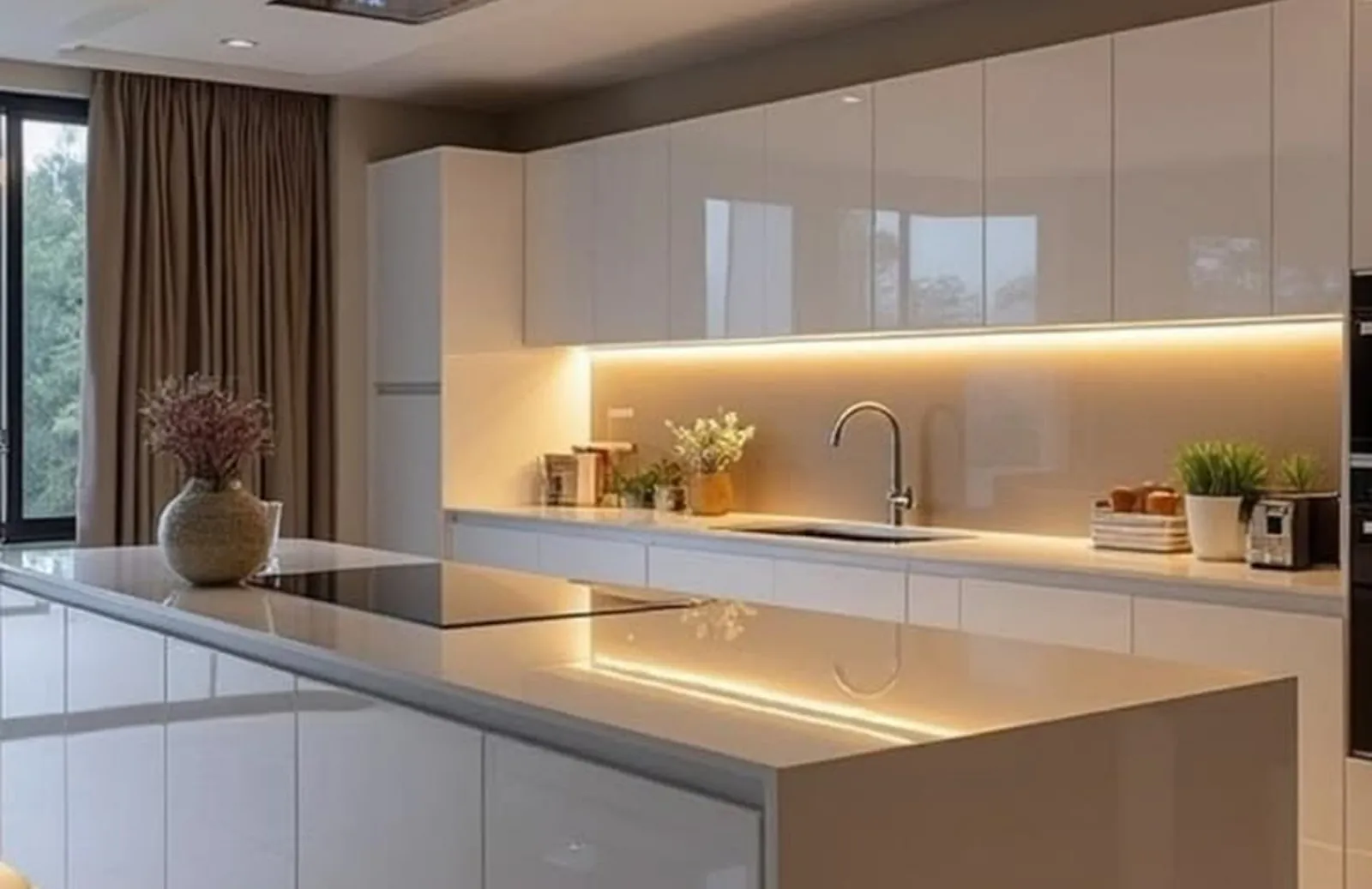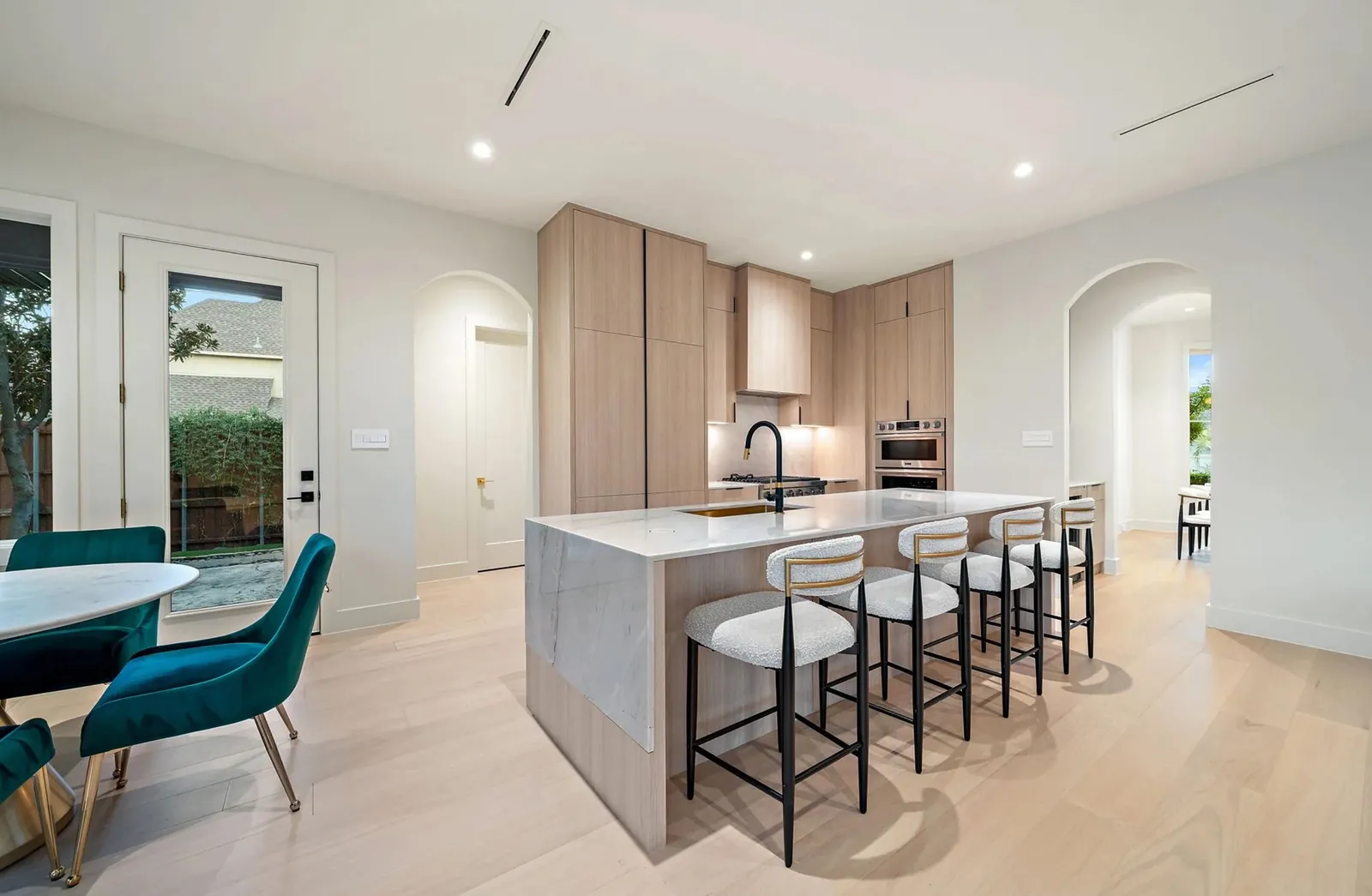
Kitchens used to be designed around appliances and square footage. Today they are designed around people. Wellness has become a guiding principle for kitchens, living areas and storage — and according to the National Association of Realtors’ Remodeling Impact Report, more than 80% of homeowners want to be at home more after a kitchen renovation.
The kitchen as a wellness hub
Flow, function and comfort now come first. The requests we hear most often:
- Natural materials, such as solid wood with low-VOC finishes
- More natural light, through open shelving and layout choices
- Organised storage that reduces clutter
- Multi-functional islands made for shared meals
Research from the Harvard T.H. Chan School of Public Health links air quality, material safety and lighting to cognitive function and health. Custom cabinetry supports all three — with drawers that clear the countertops, hidden recycling centres and pantry systems that make healthier eating the easy option.
Beyond the kitchen
The same thinking applies throughout the home: built-in offices that help you focus, mudrooms with intentional storage, spa-inspired vanities in natural textures and calm, minimal living-room built-ins. Each one supports daily routines, mental clarity and long-term livability.
Wellness design and resale value
Designing around how you live also protects your investment. The Remodeling 2023 Cost vs. Value Report ranks kitchen remodels among the top projects for return on investment, and buyers increasingly picture how a space will support work, family meals and wellbeing.
Resale-friendly features include durable cabinetry, flexible storage, sustainable materials and open but functional layouts.
The future of home is personal
More homeowners are asking a simple question: does this space support the way I want to live? Craftsmanship is the starting point, because cabinetry shapes daily routines. Spaces designed around lifestyle rather than trends support wellbeing — and hold their value.
Wellness isn’t a feature. It’s the foundation.